 Image 1 of 1
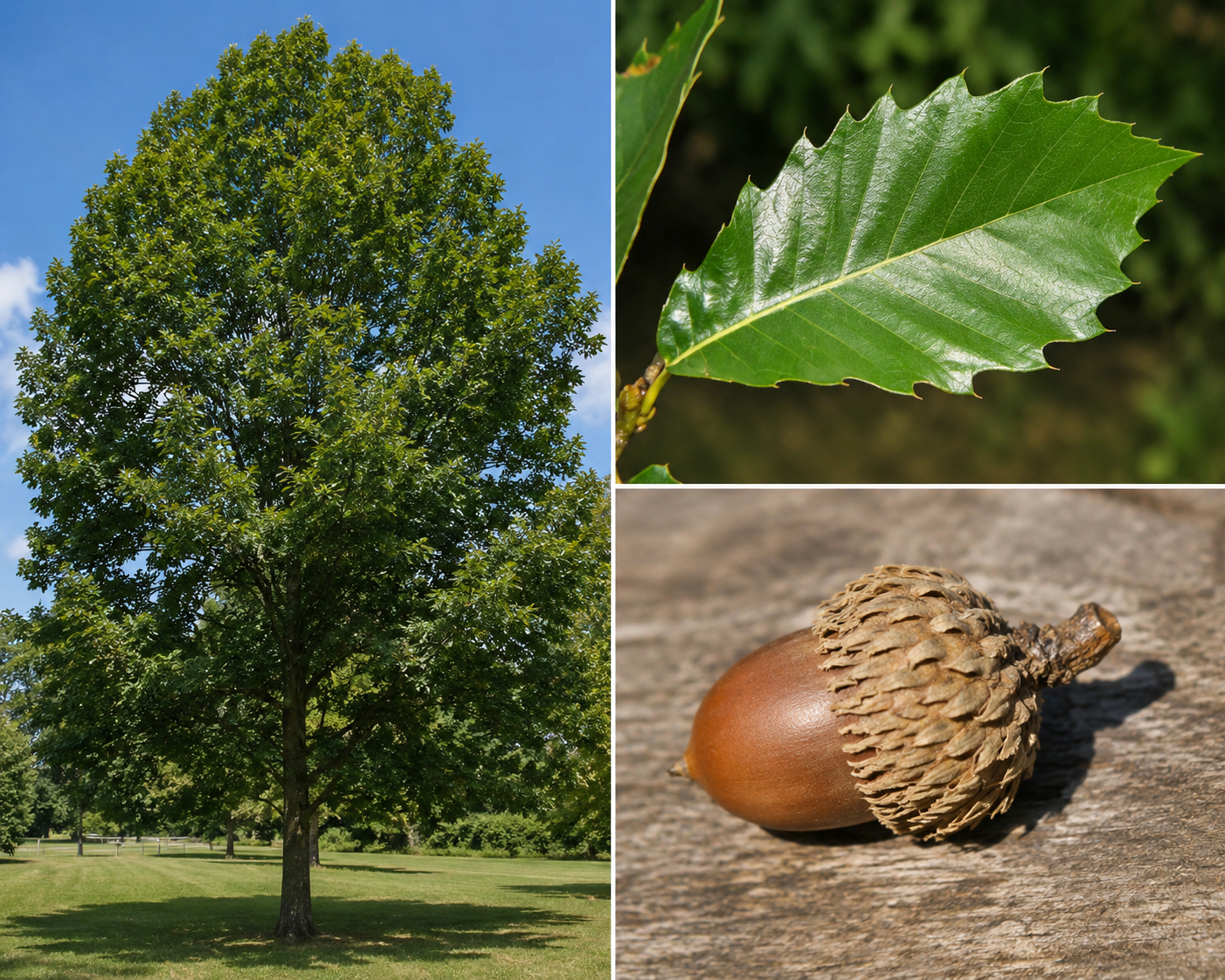
Chinkapin Oak (Quercus muehlenbergii) is a large, long-lived native oak in the white oak group, valued for its adaptability, wildlife benefits, and handsome shade-tree form. Its glossy, chestnut-like leaves give it a distinctive appearance, while its small acorns provide an important food source for wild turkey, grouse, black bear, chipmunks, deer, squirrels, and other wildlife. In the landscape, Chinkapin Oak makes an excellent shade tree for large yards, parks, naturalized plantings, and open spaces.
Chinkapin Oak grows best in full sun and performs well in moist to dry, well-drained soils. It is especially noted for tolerating alkaline and limestone-based soils, which makes it more adaptable than many other oaks. In its native range, it is commonly found on dry upland sites, rocky slopes, and well-drained soils, but it can also adapt to clay, loam, sandy, and drought-prone conditions once established. Best suited for areas with enough room for a large-growing shade tree.
This oak typically grows 40 to 60 feet tall with a broad, rounded crown and a spread often approaching 40 to 60 feet at maturity. It has a slow to moderate growth rate and develops strong branching with attractive gray bark as it matures. Leaves emerge yellow-green in spring, mature to glossy green during the growing season, and turn yellow, yellow-brown, or yellow-orange in fall. Small, yellow-green catkins appear in spring as the leaves emerge, followed by small acorns that mature in fall.
Chinkapin Oak (Quercus muehlenbergii) is a large, long-lived native oak in the white oak group, valued for its adaptability, wildlife benefits, and handsome shade-tree form. Its glossy, chestnut-like leaves give it a distinctive appearance, while its small acorns provide an important food source for wild turkey, grouse, black bear, chipmunks, deer, squirrels, and other wildlife. In the landscape, Chinkapin Oak makes an excellent shade tree for large yards, parks, naturalized plantings, and open spaces.
Chinkapin Oak grows best in full sun and performs well in moist to dry, well-drained soils. It is especially noted for tolerating alkaline and limestone-based soils, which makes it more adaptable than many other oaks. In its native range, it is commonly found on dry upland sites, rocky slopes, and well-drained soils, but it can also adapt to clay, loam, sandy, and drought-prone conditions once established. Best suited for areas with enough room for a large-growing shade tree.
This oak typically grows 40 to 60 feet tall with a broad, rounded crown and a spread often approaching 40 to 60 feet at maturity. It has a slow to moderate growth rate and develops strong branching with attractive gray bark as it matures. Leaves emerge yellow-green in spring, mature to glossy green during the growing season, and turn yellow, yellow-brown, or yellow-orange in fall. Small, yellow-green catkins appear in spring as the leaves emerge, followed by small acorns that mature in fall.